Apple vs Samsung – Hail the new winner


I don't know about you, dear readers, but I'm getting tired of the endless Apple–against–Samsung war. Yet, the battle takes a new turn and is held on a fresh ground – in the U.K. – and it deserves to be discussed.

So, here's the deal: Apple has lost the process against its Korean rival and was prescribed to publicly admit that iPad's design was not infringed by Samsung's tablets. Judge Colin Birss made a decision on July 9 that Apple should make a publication to British newspapers and its U.K. website focusing upon Samsung being innocent of crime.
These publications are needed to make it clear for everyone that Samsung didn't break the U.K. Law, despite numerous lawsuits against the Koreans across the four continents (remember the U.S., for instance), which definitely harm Samsung's sales rates.
Yet this order can't be found directly in Birss' judgment, though it was discussed later in court. According to Judge Colin Birss' words, provided by Bloomberg, the order should correct the mistaken impression that Samsung copied the Apple's product. He said that the post should remain on Apple's U.K. home page for 6 months. This is seen as an attempt to heal the publicity wounds made by Apple to the Korean rival. Still, it is said to be unusual even for the British law. In other words Apple is obliged to advertise its rival, but who would do it willingly?
If you've been lucky to read the judgment, you know that Samsung won the case with the judge stating: “They are not as cool.” Thus, the court victory has allowed Samsung to sell its products on the British market, though it has colored its product's reputation in grey at the same time. On the other hand, Apple went out of the court building with no sales injunction in hand.
Well, this round is after Samsung, but was it the last lawsuit in sight? Frankly speaking, I doubt.

Picture credit: bloomberg.com

iPhone 5 Body Details


Images of detailed iPhone 5 schematics have been published on the website of repair firm iLab Factory, just a day after several photos appeared that showed the front and rear of the new iPhone.
First identified by Japanese Apple blog Macotakara, the design schematic closely resembles the leaked photos, which show a taller device with a 4-inch screen and a relocated FaceTime camera.
Measurements obtained by MacRumors indicate that the next-generation iPhone will measure 90.1mm high and 51.4mm wide, which correlates with a 4-inch diagonal screen and 16:9 aspect ratio.
Besides the increase in screen size and relocation of the FaceTime camera to above the earpiece, the design of the iPhone 5 does not depart greatly from the iPhone 4. Despite earlier rumors, there is no elongated home button, and no ‘teardrop’ form factor.

Samsung's Galaxy Tab 10.1 banned in the United States

Aggression of Apple

True to its recent market strategy, Apple is becoming more aggressive toward other manufacturers: the company unleashes a patent war against anyone who puts up any competition. Motorola, HTC, Samsung – these companies, which use the Android mobile platform on their smartphones and tablets, have already seen their patents challenged in the court. The Apple's goal in this case is obvious: to hinder and limit the growth of the Google Android system.

Apple vs Samsung – a battle of titans

Finally, Apple has won one of its patent battles achieving a sales ban of Samsung's Galaxy Tab 10.1 in the United States until the dispute is settled. Fortunately, the court's decision doesn't affect the Galaxy Tab 10.1 II, the tablet's new edition.
However, Apple is not going to stop at this, pondering the prohibition of sales of the Samsung Galaxy S3 smartphone as its next move.


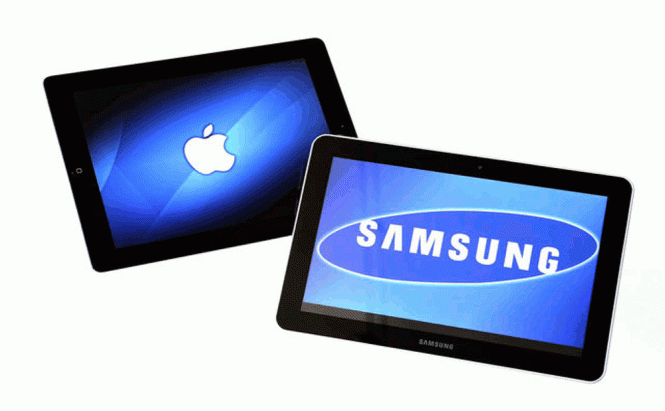
Apple vs Samsung – in case you should confuse these devices
The recent event is just another step in a long history of international litigation between Apple and Samsung, the two biggest tablet and smartphone manufacturers in the world. In December 2011, the court denied Apple's appeal concerning a design infringement in the Samsung Galaxy tablet in that it copied the look of its popular device, the iPad, but then a federal appeal demanded a reconsideration of Apple's request. Last week, a Dutch judge ruled that Apple must pay Samsung a compensation for the use of its patents related to the way in which tablets are connecting to the Internet. Oddly enough, however, the precedent with the Galaxy Tab 10.1 didn't impact the way the companies work together: the latest iPad continues using some components manufactured by Samsung.
Reuter's experts claim that “A decisive injunction in one of the U.S. legal cases could strengthen Apple's hand in negotiating cross-licensing deals, where firms agree to let each other use their patented technologies.” This fact leads to an idea: could it be that if Apple wins more and more lawsuits, it will not only strengthen its market position, but also it will have more freedom in managing its opponents' patents? In the meantime, conducting this aggressive anti-competitive policy by using all available legal means, Apple is also getting a huge profit, all while gradually displacing its rivals from the market.

Who will challenge the monster?

According to the statistics, Apple sold more than 13.6 million devices over the period from January to March, which accounted for 63% of the total sales of iPads on the market. Whereas Samsung sold 1.6 million tablets within the same period, making up 7.5 % of the market. The company introduced Galaxy 10.1 last June, and it released an upgraded version, the Galaxy Tab 10.1 II, last month.
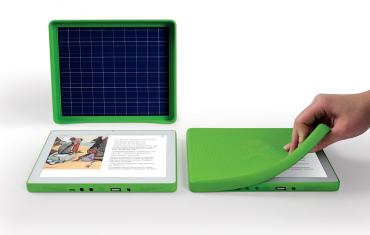
In the meantime, Microsoft introduced its new line of tablet computers last week. The company will be competing with Apple promoting the Windows operating system on their devices. As for Google, it is planning to release a $199 tablet co-branded with Asustek. Besides, Toshiba has recently introduced Excite 13 – a tablet bigger than any other, with a 13.3-inch display. Finally, there are numerous tablet computers and smartphones being developed for local markets in different countries, like Explay in Russia, or the OLPC XO-3 tablet computer in India. The last one iplanned to be introduced for $100 only! According to various media, the OLPC company has already awarded a grant for production of its next-generation device.


   The new OLPC XO-3 tablet computer, for only $100!
All these tablets are somehow inferior to the great Apple's product in their features, but their price can surely also be a decisive factor, appealing to lots of ordinary computer users.


Firefox for Android Got Updated


The mobile browsers are becoming faster and faster, with their feature range widening in every new release. And the question whether to use the mobile version to check the latest news in the bus on your way to work or via the desktop browser later is becoming more habit-dependent. Mozilla is trying hard to maintain its standards and keep up with the rest of the pack: a new Android version of Firefox is now available.
The new Android version of Firefox has also a whole bunch of new features to check out. And they seem to be working, as Mozilla made their junior Firefox work faster than any other popular Android browser: it operates at almost 40 frames per second.
Firefox for Android 14.0: Frames per Second
The most significant changes to the Android Firefox include the support for Adobe Flash, the user interface redesign, the new Start Page and reformed Top Sites, Bookmarks and History access. Besides the mentioned ones, some other minor alterations were applied involving developer's new features and bug fixes. Sadly, but several known bugs have remained unresolved yet.

What do All These Words Stand For?

Well, first of all, for us users the support for Adobe Flash means that we can now watch on-line videos, play games and interact with other flash web content on our Android devices. For example, try to play Mozilla's BrowserQuest game or watch something on YouTube and make your own opinion about the browser.
The browser now features an Awesome Screen and Awesome Bar, facilitating the use of the web search, Top Sites, Bookmarks and History access. The start page of your Firefox for Android contains the thumbnails of the top visited sites, the next two tabs give easy access to Bookmarks and History. So there is no need now to delve deep into the browser options to get to your history statistics.


Firefox for Android 14.0: Start Page

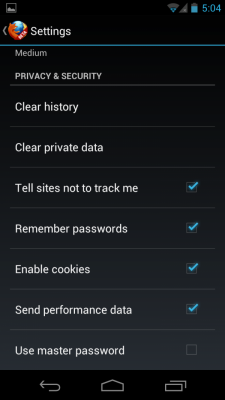
On top of this, you also get the safety of Web-surf with Do-no-track feature and the default setting for plug-ins to play on the tap.What Was Fixed and What Still Awaits its Turn?Mozilla's team have fixed many known bugs. So, the page reload does not provoke the zoom level to increase anymore, the full screen mode for the flash videos is displayed correctly, the text viewing errors have been amended, etc., etc., etc...


Firefox for Android 14.0: Security Settings


However, there are still hordes of known bugs to fix, like GIF animation play issues when changing the image size, partial functional of forms, unexpected browser behavior when changing the device orientation and some other.

So, Is It Good or Bad?

All in all, This Firefox for Android is far better than the previous version. It is faster, safer and more functional. To my mind, it is worth giving a try: there's a whole lot of new features to come yet.


Picture credit: blog.mozilla.org.


The First Trojan Infecting Apple App Store


We all are used to the fact that the Apple Store apps are totally secure. But the world changes constantly and what used to be taken for granted just a couple of days ago, may vanish forever tomorrow. And the day came when the first malicious app got into the Apple Store.

A Bit of Detail

The application is called Find and Call. This is a Russian-language app revealed as malware by the researchers at the Kaspersky lab.
At first, Find and Call was considered an SMS worm but was classified as a Trojan. The application uploaded the user's contact list to a remote server and used it to send SMS with the URL of itself to each person in the list. The spam messages claimed to be from the victim, coming as from the trusted source.

How Does it Work?

Once downloaded, Find and Call asked to register via email and cell phone number. Mind that no validation check of either information was done before proceeding. If you opted-in for 'find friends in a phone book', your address book was downloaded to a remote server without any user notification or any sign of these weird things going on right under your nose. The contact data is then used to send out spam to the user's contacts. The spam didn't look as such at the receiver's end.

What's All the Fuss About?

The discovery is very noticeable because this is the first time over the last five years since the iOS Apple App Store first launched that malware has made it through the App approval procedures. TheFind and Call app has been removed from the Store due to its violation of Apple Store guidelines by unauthorized use of users' address book data, though Kaspersky claims it's still searchable for some users.
So, what can I say? If we want to get better protection from malware apps we should first of all stay alert and choose the apps to install even more carefully: The signs are that the age of the safe Apple Store is over.

An Email Privacy Surprise from Facebook


When did you last check your Facebook profile? If it was long ago then go and check your email settings. Whoa, you might get really surprised. The Facebook team, probably being overconcerned about the privacy matter, have set the status of all your personal emails but @facebook.com to 'Hidden from Timeline'. This adjustment is set as a default one and is applied to all accounts regardless of previously chosen settings for the email-privacy options.
Your Facebook mail is visible to those with the permission to view your previous emails. Thus, this move looks more like a poorly planned attempt to increase the usage of Facebook email addresses, which didn't previously show to be that popular.
For me, even though I do not use my account to share the contact information with my friends, this intrusion into my personal preferences without any notifications is totally unacceptable.
Facebook have brought a lot of inconveniences with these changes – no doubt. Besides, I don't really see why they needed these changes so badly: the users could make their emails invisible eons ago. Why should anything be changed?

How to Restore the Settings?

Of course, if you do not like the new way your emails are displayed in your profile, you can reset everything, but you'll have to do it manually.
In order to change the email settings, you have to enter your Timeline and go to 'About' link right below your personal info. On the Info page, look for the Contact Info section and click on the Edit button. After that, move your mouse to the top right part of the page and change settings for all personal email addresses: either 'Hidden from Timeline' or 'Shown on Timeline', choosing who you'd like to see it, etc. You may also hide your @facebook.com address if you want to.

Could They Have Done It Better?

Well, the Facebook team didn't speak out about the controversial changes, so their actions can be treated ambiguously. It is hard to say what their intentions really were: whether they really wanted to protect their users' privacy or tried to promote their mailing system. Whatever their true motives were, they failed in a really big way.
The concern about privacy is the right thing, but it shouldn't be overdone. It would be better if the users would have been informed about the upcoming changes before those were rolled out, possibly accompanied by detailed explanations of how you can change or reverse the new settings. And I do firmly believe that if you can't do something the right way better not do it at all.
And if you ask me to draw the bottom line, I'll tell you what: Facebook could have done it better.

Acer Launched Dual Screen Laptop Acer ICONIA

Acer has recently launched a dual screen laptop Acer ICONIA 6120 that costs $1,200. When you open the laptop you will find no keyboard, but two 14 inch, touch sensitive screen facing each other, closed it looked like regular laptop.

You can’t use a laptop that have no touch pad and keyboard, so Acer Iconia have a virtual keyboard and a touch pad that appears on the lower screen. If the lower screen keep showing the keyboard and the touchpad then what is good for the lower screen. So it’s not like we’ve gained any screen space. Only by making the keyboard disappear you can use the screen to display content, that is it displays relevant controls and changes according to your needs.
Acer says the Iconia is “ideal for anyone who prefers the familiar computing environment of Microsoft’s operating system.” They recommends it for business use.
As it costs only $400 extra then a convenient laptop, so it shows Acer’s real guts in putting this one into mass production, as most models that are as strange as the Iconia, at most get to grace a display case at a trade show.
The company also revealed about its new Clear.fi media sharing system. As per news it is a cloud-based system that is designed to play multi-format content over multi-platform devices, enabling any number of gadgets to talk to one another in order to make content shareable and visible with any other device.So long as there’s a router and a WiFi connection nearby, any Clear.fi-enabled device should be able to share, search and consume.
Acer ICONIA  Specifications:
  • OS: Windows 7 Home Premium (64-bit)
  • CPU: Intel Core i5-480M / 560M / 580M
  • RAM: up to 4GB of DDR3 memory
  • Screen(s): Two, A pair of 14-inch multitouch displays (1366×768 resolution)
  • Graphics: Intel HD graphics (128MB RAM)
  • Ports: VGA / HDMI outputs, 2 USB 2.0 ports, 1USB 3.0 port
  • Audio: An inbuilt microphone and a S/PDIF interface
  • Hard Drive: 320/500/640/750GB hard drive
  • Camera: Acer’s CrystalEye webcam (1280×1024 resolution)
  • Wifi: 802.11b/g/n WiFi
  • Bluetooth: Bluetooth 3.0+HS
  • Other Connectivity Options: integrated 3G WWAN, gigabit Ethernet
  • Battery: A four-cell battery
  • Weight: 6.18 pounds
  • Warranty: One Year
  • Price: $1,200
Photo Gallery of Acer ICONIA Laptop


iLover © 2012 | Designed by LogosDatabase.com, in collaboration with Credit Card Machines, Corporate Headquarters and Motivational Quotes